Vinted - statistics & facts
Needing an easy way to sell her extra clothing during a move to Vilnius, Lithuania, co-founder Milda Mitkut臈 worked together with Justas Janauskas to bring Vinted to life in 2008. Since then, the recommerce site has arguably become the most notable second-hand fashion marketplace throughout Europe, used by millions of buyers and sellers alike in its operating markets.
Lithuania's first tech unicorn
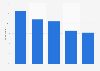
Given Vinted's positive reputation and vast user base, it is unsurprising that the company is the first tech unicorn to come out of its headquarters country, Lithuania. Vinted officially reached unicorn status in 2019. Since then, the C2C marketplace has not let its investors down. In 2025, the company's annual revenue surpassed the one billion euro mark for the first time, well over quadruple the revenue generated only four years prior in 2021, and a staggering increase from the ten million euros reported in 2017.
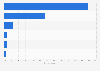
Vinted's revenue isn't the only figure that the company can boast. In 2024, Vinted's estimated gross merchandise volume (GMV) also reached new heights, totaling over 12.5 billion U.S. dollars, of which the most was generated in France, followed by the UK, and then Italy. Vinted Group's immense success led the company to launch Vinted Ventures in 2025, a dedicated investment arm intended to support Series A to C recommerce startups throughout Europe.
Where and why people shop Vinted
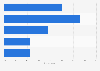
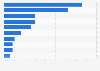
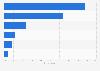
While Europe has a wide range of fashion brands to choose from, from fast-fashion brands like Shein and ASOS to curated marketplaces like Zalando, the Vinted shopping app still ranks among the most popular fashion shopping apps in several of its markets. In 2025, most of these downloads came from the UK, with nearly 4.8 million, followed by Germany, France, and Italy, respectively. In a 2025 company survey, over half of Vinted sellers said they list items because they feel it's a shame to throw away things someone else might want.
Second-hand as a first choice
The massive success achieved by Vinted proves that even while other channels within the online fashion industry continue to grow and attract users, so long as people have reasons to sell and buy second-hand, their platform will always have a market to thrive in. Nearly nine in ten Vinted users now say they look for an item on the platform first before buying something new. With recommerce capturing a growing share of overall e-commerce in the EU, the second-hand shift looks less like a passing trend and more like a structural change in how Europeans shop.