Malware - statistics & facts
Malware, or malicious software, is designed to take charge or disrupt its victim's computer infrastructure. By posing as harmless files or links, these programs trick users into downloading them 鈥� thus allowing foreign access not only to the victim's computer but to the entire network within an organization. In 2024, most malware attacks, roughly 68 percent, occurred via e-mail. Threat actors mostly used multipurpose malware in threat campaigns in 2024. Among other most commonly used types of malware were infostealers, mobile, as well as cryptominers.
The main tendency observed is that even though the number of malware attacks has decreased, new threat variants continue to emerge. This means that the impact of these attacks can still be as prevalent as with the high number of attacks. This, once again, means that cybersecurity strategies must be often updated and incorporate newly discovered threats.
Industries most targeted by malware attacks
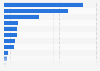
When it comes to the most attacked industry sectors by cybercriminals, it highly depends on the organization鈥檚 vulnerability and the amount of data they possess. Most of the time, threat actors target industries such as manufacturing, finance, professional services, and healthcare. In 2024, the volume of malware attacks targeting hardware and semiconductors market saw an increase of 179 percent. In 2024, the education and research sector encountered the highest average weekly number of cyberattacks in the same year. Additionally, malware attacks on insurance companies have seen the most significant spike among overall sectors.Mobile malware
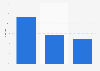
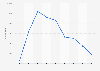
In the second quarter of 2025, about 143,000 malicious packages were detected on mobile devices worldwide. An uptick in this number happened in the fourth quarter of 2020 when more than 2.1 million mobile malware installation packages were found. Trojan-Banker was the most common type of mobile malware in the second quarter of 2025, followed by RiskTool and AdWare.Ransomware as a primary threat
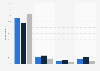
When talking about specific types of malware, ransomware attacks still pose a significant threat to organizations worldwide. In 2024, France ranked first worldwide by the share of organizations experiencing ransomware attacks. In the meantime exploited vulnerabilities were the most common root causes of ransomware attacks, alongside compromised credentials and malicious e-mails. In addition, new ransomware families are detected each year.State of cybersecurity
Malware protection is a complex process requiring the input of every party involved. Besides implementing various software solutions, it is also important to constantly train employees, thus raising awareness. An increasing amount of attention is currently paid to the human factor. However, most internet users are confident in their ability to identify scam e-mails and deepfakes. As of 2024, the industries of manufacturing, business and travel services had all reached a mature level of cyber preparedness.The main tendency observed is that even though the number of malware attacks has decreased, new threat variants continue to emerge. This means that the impact of these attacks can still be as prevalent as with the high number of attacks. This, once again, means that cybersecurity strategies must be often updated and incorporate newly discovered threats.