BlackBerry - statistics & facts
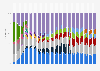
It is hard to imagine a world where Apple, Samsung, or Xiaomi did not reign over the smartphone industry. However, Canadian-based BlackBerry, known then as Research in Motion (RIM), launched its BlackBerry 5810, one of the first phones with email capabilities, as early as 2002, and continued dominating the smartphone market until the end of 2009. After falling from a high point of 20 percent market share in the smartphone market around 2010, BlackBerry found itself at a crossroad, restructuring itself as a cybersecurity and enterprise software company specializing in securing endpoints and user data flow.
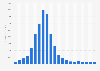
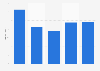
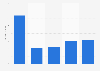
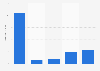
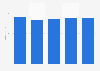
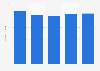
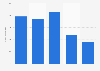
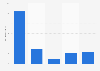
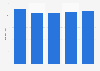
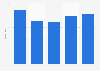
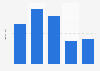
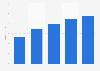
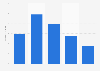
This shift was also reflected in their financial data. BlackBerry experienced significant decline in revenue, from over two billion U.S. dollars in 2016 to 656 million U.S. dollars in 2023 鈥� the lowest revenue figure since 2004. Until 2015, the company鈥檚 business segment that generated the highest amount of revenue was Devices. Today, its three main segments consist of Licensing, IoT, and Cybersecurity, which generated almost 45 percent of BlackBerry鈥檚 revenue in their 2024 financial year.
While its transition away from smartphones has secured its survival, it remains to be seen whether BlackBerry will succeed in establishing itself as an AI for cybersecurity and IoT powerhouse.
Leaving the mobile phone market and uncertain financial figures
In the early 2010鈥檚, BlackBerry鈥檚 sales had fallen dramatically, as it had become more and more clear that competitors like Apple and Samsung were increasingly dominating the mobile phone market. In 2014, BlackBerry had a net loss of nearly six billion U.S. dollars. The company had considered several drastic changes including a sale or joint venture. In 2013, John Chen became the new CEO, hoping to bring BlackBerry into a new, more profitable chapter. BlackBerry stopped producing cell phones in 2016, leasing its name to partners TCL and Optiemus Infracom, and subsequently began its transition to cybersecurity consulting.This shift was also reflected in their financial data. BlackBerry experienced significant decline in revenue, from over two billion U.S. dollars in 2016 to 656 million U.S. dollars in 2023 鈥� the lowest revenue figure since 2004. Until 2015, the company鈥檚 business segment that generated the highest amount of revenue was Devices. Today, its three main segments consist of Licensing, IoT, and Cybersecurity, which generated almost 45 percent of BlackBerry鈥檚 revenue in their 2024 financial year.
Cybersecurity, EoT, and automotives
BlackBerry gradually transitioned its business focus towards AI-driven endpoint protection and threat detection. Notably, BlackBerry is trying to position itself as the leading trusted AI for cybersecurity company. A substantial portion of this endeavor was its purchase of Cylance in 2019, a privately held AI and cybersecurity company skilled in algorithmic sciences and machine learning. Furthermore, BlackBerry extended its portfolio into the Enterprise of Things (EoT) - meaning IoT for enterprises, providing solutions in industries such as automotive, healthcare, government, and logistics. In 2022, BlackBerry began its collaboration with Amazon Web Services (AWS) to develop and market BlackBerry IVY, an intelligent vehicle data platform leveraging BlackBerry QNX鈥檚 automotive capabilities. Released in May 2023, the platform allows carmakers to safely access a vehicle鈥檚 sensor data and apply machine learning at the edge to generate and share predictive insights and inferences.While its transition away from smartphones has secured its survival, it remains to be seen whether BlackBerry will succeed in establishing itself as an AI for cybersecurity and IoT powerhouse.