Uber Technologies - statistics & facts
Now and then a corporate phenomenon occurs when a brand name becomes synonymous with the wider product. Band-Aid, Velcro, and JCB are some notable instances. Following its meteoric rise in the world of taxi and cab services after its founding in 2009, Uber can now claim to be among this rare breed of brands. Whether or not the phrase 鈥渓et鈥檚 get an Uber鈥� was instrumental in the company鈥檚 growth or was its by-product is up for debate. What is certain, however, is that Uber Technologies has evolved greatly since its inception, having risen to the number one spot among the leading mobility services by brand awareness in the United States in 2025.
Strength through diversity
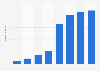
When assessing Uber鈥檚 global revenue by segment since 2017, the company鈥檚 steady rise from around eight billion U.S. dollars to 52.02 billion U.S. dollars in 2025 can be in part explained by the growth of Uber Eats during the coronavirus pandemic. In 2019, Uber Delivery only made up around 10 percent of the brand鈥檚 total revenue, however, this jumped to over a third in 2020 and in fact surpassed Uber Mobility in 2021. Following the pandemic, Uber Mobility returned to being the largest income stream for the company, recording over three billion rides per quarter in 2025. Nevertheless, Uber Eats grew proportionally to the brand鈥檚 other segments and accounted for over 80 million global users in 2023.
From market share to profit
Although Uber Technologies broke the 10 billion U.S. dollar revenue mark in 2018, the company operated mostly at a loss until 2023. That year, however, the company saw its net income reach 1.89 billion U.S. dollars and grew to around 10 billion U.S. dollars in 2024 and 2025. While the concurrent growth of the three main segments of Uber Technologies goes some way in explaining this way to profitability, other factors have also been at play. Having already had the聽largest market share of any ride-hailing and taxi company worldwide in 2022, Uber Technologies has significantly grown its overseas operations, with a large emphasis being on Europe, the Middle East, and Africa. Perhaps more importantly, the global costs and expenses of Uber have become proportionally smaller, going from around 14.31 billion U.S. dollars in 2018, which was around 125 percent of that year鈥檚 revenue, to 41.18 billion U.S. dollars, which was around 80 percent of the revenue in 2024.
What does the future hold for Uber?
While Uber鈥檚 prominent position in the ride-sharing and taxi market is likely to continue, the company鈥檚 rise has not been free of controversy. Historically, the taxi market has been highly regulated, however, the introduction of companies like Uber has seen prices be undercut leading to concerns about driver earnings and working conditions. Although a return to a highly regulated market is unlikely, the emergence of rival brands such as聽Lyft and the room for innovation that the mobility industry offers mean that what rises can also fall.聽