Autonomous vehicles worldwide - statistics & facts
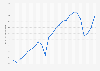
Are autonomous vehicles the future of the automotive industry? In the second half of 2025, Japanese automaker Nissan demonstrated the self-driving technology it is developing in partnership with Wayve by testing it through downtown Tokyo. This new system is set to be available to consumers in 2027 and adds Nissan to the list of companies already working on autonomous driving technology. With a market forecast to reach some 114.5 billion U.S. dollars in size in 2029 and autonomous electric auto manufacturers projected to record around 40 billion U.S. dollars in earnings before interest and taxes in 2030, autonomous vehicles and autonomous mobility are an attractive sector for many traditional automakers, startups, and tech companies. However, despite the growing investments in the field and bold proclamations from select car manufacturers, fully autonomous cars may still be years ahead.
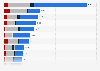
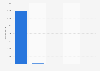
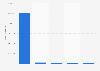
Most passenger cars sold worldwide in 2023 had some autonomous driving systems, but these did not surpass SAE鈥檚 Level 2, which implies constant supervision of features providing steering and braking or acceleration support to the driver. This is still a far cry from full automation, with Level 3 autonomous vehicles being forecast to enter the global market in 2025.
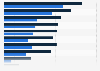
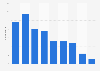
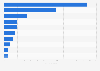
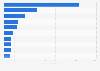
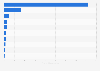
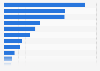
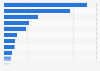
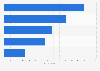
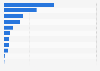
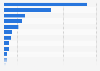
As of January 2024, China-based UISEE Technology was the leading autonomous vehicle unicorn worldwide by funding, and two other members of the top five were headquartered in the Asian country. In terms of company value, ZongMu Technology received the highest valuation for autonomous vehicle unicorns in June 2021, surpassing U.S. start-ups. Traditional automakers are also firmly inserted in the industry, making use of their large patent pool in areas such as human-machine interface and communication and security.
Varying levels of autonomous vehicles
The terminology surrounding autonomous vehicles is fragmented and inconsistent. The terms 鈥榓utonomous鈥�, 鈥榓utomated鈥�, and 鈥榮elf-driving鈥� may be used interchangeably or to describe various degrees of vehicle automation. To standardize the language, SAE International published a six-level classification system based on the degree of driver intervention in 2014. Level 0 is used for vehicles with minimal automation that assists the driver in certain situations. At the same time, Level 5 stands for fully autonomous vehicles that can function without a human driver.Most passenger cars sold worldwide in 2023 had some autonomous driving systems, but these did not surpass SAE鈥檚 Level 2, which implies constant supervision of features providing steering and braking or acceleration support to the driver. This is still a far cry from full automation, with Level 3 autonomous vehicles being forecast to enter the global market in 2025.
A sector attracting tech startups
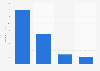
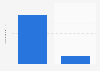
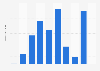
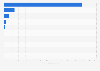
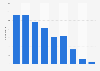
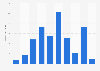
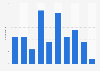
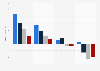
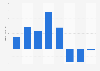
The attractiveness of the market for companies from diverse sectors has led to uneven funding between 2016 and 2024. Around 12.8 billion U.S. dollars were invested in autonomous vehicle companies in 2021, making it the year with the largest funding amount for the sector. Funding of over nine billion was also recorded in 2019 and 2024. Most of this funding was in the United States, with investments over quadruple those in China. Despite this large divide, Chinese unicorns tended to receive more funding than their American counterparts.As of January 2024, China-based UISEE Technology was the leading autonomous vehicle unicorn worldwide by funding, and two other members of the top five were headquartered in the Asian country. In terms of company value, ZongMu Technology received the highest valuation for autonomous vehicle unicorns in June 2021, surpassing U.S. start-ups. Traditional automakers are also firmly inserted in the industry, making use of their large patent pool in areas such as human-machine interface and communication and security.