Steel industry - Statistics & Facts
The steel industry is regarded as one of the biggest and most dynamic industries globally. Therefore, new developments in the industry have a significant impact on global economies; however, it is also highly susceptible to being affected by international events.聽
2023 was a difficult year for steel producers and consumers. The ongoing war between Russia and Ukraine has exacerbated the scarcity of raw materials and energy used in steel production. The energy crisis, which existed prior to the war, persisted and resulted in a cost of living crisis that directly impacted the disposable incomes of households, resulting in a reduction in global consumption. Since then,聽global crude steel production has seen a continued decline, falling from 1,904 million metric tons in 2023 to approximately 1,850 million metric tons in 2025. Monthly crude steel production聽fluctuated due to the mentioned problems that countries have been facing, with a dip recorded in December 2023 in the major producing countries.
China is the global steel market leader
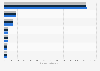
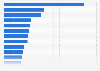
China was the leader of the鈥�steel export market鈥痠n 2024, dwarfing all other countries by over 85.9 million metric tons. Over the years, China, the world's biggest steel producer, has increased production and flooded the markets with cheap steel. The China-based steelmaker, Baowu Group, was the鈥痺orld鈥檚 largest crude steel producer鈥痠n 2024 with an output of 130.1 million metric tons of crude steel. It was followed by the Luxembourg-based ArcelorMittal, with 65 million metric tons of products.聽The Baowu Group reported revenues of around 125.1 billion dollars, which was approximately 62.7 billion more than its main competitor as of 2025.聽
Does steel scrap the future?
The steel sector plays a significant role in generating global greenhouse gas emissions due to its high-energy production processes. The topic of decarbonizing the industry has gained considerable importance in recent years, particularly considering the growing awareness of environmental issues and the implementation of the Paris Agreement. In 2023, the global average emissions intensity of steel production amounted to 1.92 metric tons of carbon dioxide (tCO鈧�) per metric ton of crude steel cast.
One of the most effective ways to reduce the emission levels of the sector is to use recycled steel scrap, as steel is the most widely recycled material on the planet. Using steel scrap greatly reduces the consumption of mineral and energy resources during the production processes. Steelmakers can produce new steel products using scrap steel. In the first nine months of 2025, approximately 330.4 million metric tons of steel scrap were consumed in the leading producing markets. Of this, China alone accounted for roughly 142.2 million metric tons, representing approximately 43 percent of the total
Steel scrap can not only make the steel industry less carbon-intensive, but it can also help solve problems in the steel industry, like a lack of enough raw materials for making steel. As of 2024, a significant proportion of the聽global steel end-use was attributed to the construction and infrastructure sectors.鈥疉s a result, scrap steel has the potential to be a significant remedy for logistical issues related to basic materials in the steel markets.