Internet usage worldwide - statistics & facts
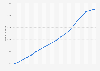
The internet continues to transform how we connect with others, organize the flow of Information, and share opinions. With its growing influence on individual consumers and large economies alike, the internet has become a vital part of our day-to-day lives. In 2025, the number of internet users worldwide stood at 5.56 billion, which means that around two-thirds of the global population is currently connected to the world wide web.
The expanded usage of the internet comes with advantages, as well as downsides. Among these are cybersecurity threats and online privacy concerns. It will most likely take an extended period of time for online markets to reach a sufficient level of online literacy, which nonetheless is very much needed to stay online and still be safe.
Online populations around the world
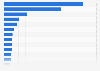
As of 2024, China remained the leading market by the number of internet users in the world, followed by India and the United States. Overall, Eastern Asia was the region with the highest number of internet users worldwide, whereas Northern Europe has the highest internet penetration rate. Despite having the most extensive online population, China鈥檚 online penetration rate was still relatively low at 78 percent, compared with countries like the Netherlands, Saudi Arabia, Norway, and the United Arab Emirates, whose internet penetration rates were approaching 100 percent. This setback can be explained by the slow progress of digital infrastructures in remote regions 鈥� an obstacle still visible in many parts of the world.Internet connectivity
While the digital population is visibly growing in many parts of the world, internet access and availability can differ significantly depending on the region. There are still countries and regions where internet access remains notably lower than the global average. As of 2024, Africa had the lowest fixed broadband subscriptions among other regions, with Asia and the Pacific representing the highest number. As of February 2025, the North Korean population remained almost entirely offline, as internet access for the general public is heavily restricted by the government and only permitted with special authorization.Mobile鈥檚 impact on digital connections
Mobile internet has become increasingly widespread and popular over the past few years, as smartphones are more readily available and affordable than ever. As internet users gradually switch to mobile devices to browse the web on the go, mobile internet now accounts for almost 59 percent of total web traffic worldwide.Global internet user demographics
As of February 2025, around 70 percent of the male population in the world was using the internet, compared to only 65.7 percent of women. This disparity is seen in almost all regions across the world but more so in the in the Arab States and Africa. As of 2024, the online usage rate was higher among individuals between 15 and 24 years than among the older generations in all regions worldwide.The expanded usage of the internet comes with advantages, as well as downsides. Among these are cybersecurity threats and online privacy concerns. It will most likely take an extended period of time for online markets to reach a sufficient level of online literacy, which nonetheless is very much needed to stay online and still be safe.